



近期,美国国债市场剧烈震荡、长期融资成本持续走高,国内财政压力持续承压。为稳住债市、平复市场恐慌,美国财政部于2026年8月推出扩容版国债回购计划,试图通过市场化干预手段对冲风险、稳定局势。
作为全球金融体系的核心,美国财政与债市的一举一动深刻影响全球资本走势与经济格局,其政策成效与潜在风险备受各界关注。针对这一国际财经热点,浙江大学管理学院教授、产业智库与案例中心主任、浙江大学资本市场研究中心主任黄英受邀在中央广播电视总台CGTN(中国国际电视台)发表专题分析文章,以专业视角拆解美国本轮托市政策的真实效用,穿透表层市场现象,深挖美国财政体系的结构性短板,并系统预判了相关风险带来的全球传导效应。
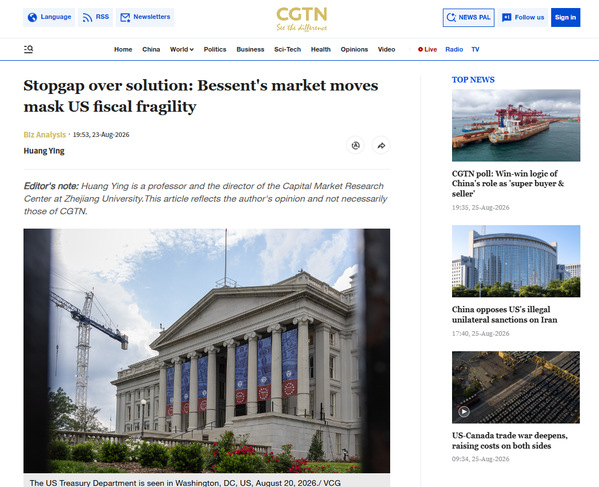
为何短期市场维稳无法解决长期财政困局?美国国债回购政策治标不治本的根源在哪?美国债务风险将对全球产生哪些冲击?本期【媒体聚焦】,我们一起来看黄英教授的解读。

黄英,浙江大学管理学院教授、博士生导师
权宜之计难成治本之策:贝森特市场操作难掩美国财政深层脆弱性
文/黄英
面对长期借贷成本走高、国债市场剧烈震荡的局面,美国财政部长斯科特·贝森特于2026年8月出台市场维稳举措。该方案扩大了美国财政部现行的债券回购计划:将长期国债单次回购操作规模上限由20亿美元提升到至少40亿美元。本次扩容回购操作的实施周期为9月9日至11月4日。结合市场测算数据,该计划年度潜在操作规模约1280亿美元。
政策落地后,美国长期借贷成本短暂回落,股票及各类风险资产价格上行,市场恐慌情绪得到了短暂缓解。然而,国债市场的短期回暖并未持续,下一交易日国债收益率便再度反弹回升。
截至当周周四开盘,市场前期涨幅尽数回吐,部分美国长期国债收益率回落至政策落地前水平。对美国财政压力的持续担忧以及全球通胀的黏性,挫伤了市场乐观情绪。投资者对巨额赤字、油价推动的通胀以及AI企业发债带来的巨额公司债,仍然心存担忧,认为该举措不过是权宜之计。正如市场分析师所言,此类市场干预仅能带来短暂缓和,无法根除根深蒂固的财政困境,只是掩盖了根本性的结构性弊端。
该项政策效果有限的核心原因,在于美国体量庞大的债务规模。截至2026年8月18日,美国联邦债务总额突破40万亿美元,其中公众持有债务约32万亿美元,即由美国政府外部投资者持有的债务。据国际货币基金组织预测,美国联邦债务总规模已达到其国内生产总值的124%。
美国国会预算办公室测算,2026财年美国财政赤字约2.1万亿美元,占GDP比重达6%,远高于学界及业界公认的3%安全警戒线。同期,联邦债务净利息支出预计将突破1万亿美元,偿债支出已成为美国联邦政府最大财政支出项目之一。
与此同时,2020至2021年期间发行的大量近乎零利率债券即将集中到期,而后续高利率再融资操作,将进一步推高美国整体债务成本。依据美国国会预算办公室基准预测,2036财年末,美国联邦债务总规模或将飙升至63.7万亿美元。面对严峻的财政前景,美国财政部选择以市场微调方式稳定局面,而非阵痛式、根本性的财政预算改革。
实际上,美国财政困局的根源,在于固化的联邦财政支出结构,并由此形成难以突破的政治僵局。美国近三分之二的财政支出为刚性法定支出,主要涵盖社会保障、联邦医疗保险及债务利息支出。削减养老、医疗等民生福利会触及大量选民利益,而上调税收又会遭到美国两党共同抵制。即便完全取消所有非国防可自由支配开支,依旧无法实现财政收支平衡。实质性的财政缩减方案在政治层面难以落地,这也使得债券市场微调操作,成为美国政策制定者拖延风险、争取时间的主要手段。由此,美国政府通过短期金融调控换取政治缓冲空间,持续推迟必要且关键的财政结构性改革。
厘清国债回购政策的作用边界尤为关键。该政策并不会缩减美国债务总规模,仅会调整债务的期限结构:通过回购部分长期国债、增加短期国债发行比例,优化美国国债的到期兑付节奏,而非从根本上降低债务体量。
在债务总量保持不变的前提下,政策仅将长期债务风险转化为高频的短期还本付息压力。若通胀水平与短期利率持续高位运行,频繁滚动的短期借贷将持续抬升美国融资成本。目前美国存量长期国债规模约5.5万亿美元,而每年1280亿美元的回购规模仅占存量的2.3%,调控力度十分有限,维稳效果极易被填补财政缺口的海量新发国债稀释。与此同时,美国国债投资者结构正在发生深刻变化:海外持有比例持续收缩,高杠杆的本土对冲基金成为核心接盘主体,这也让美国国债市场的波动敏感性大幅提升。
此外,这类临时性市场干预还潜藏着隐性经济风险。数十年来,美国债务管理始终遵循透明、可预期的规则化运行模式。财政部主动干预债券市场,可能促使投资者要求更高的风险溢价,反而推高长期融资成本,与政策初衷相悖。同时,宽松的市场调控会对冲美联储的抗通胀成效,宽松的信贷环境将刺激居民消费与企业投资,大概率再度推升通胀,加剧全球资产价格波动。长期来看,国际投资者或将动摇对美国国债全球核心避险资产属性的信心,加速减持美元资产、推进全球资产配置多元化。
总而言之,短期市场操作可以安抚投资者情绪,但治标不治本。美国正陷入“看似稳定、实则脆弱”的财政悖论:依托美元全球储备货币的特殊地位,美国尚未爆发全面债务危机。但持续扩张的财政赤字、不断攀升的偿债成本,持续侵蚀美国长期财政健康底色。若福利体系、税收制度不开展实质性改革,单纯依靠常态化市场维稳举措,只能延后债务风险的爆发时点,无法根除隐患。一旦风险集中释放,将对全球金融体系造成强烈冲击,其中新兴市场经济体将承受最显著的负面影响。
附:英文原文
Stopgap over solution: Bessent's market moves mask US fiscal fragility
Huang Ying
Faced with rising long term borrowing costs and wild swings in its government bond market, US Treasury Secretary Scott Bessent unveiled market calming measures in August 2026. The measure expands the Treasury's existing bond buyback program: The maximum size of buyback operations for longer-dated Treasury securities was increased from $2 billion to at least $4 billion per operation. The expanded operations will run from September 9 through November 4. Some market estimates put the potential annual scale at around $128 billion.
Following the announcement, long term borrowing costs dipped initially, equities and risk assets rose, and market jitters briefly eased. The initial bond rally quickly faded, with yields rebounding the following trading session.
By Thursday's opening bell, all early gains vanished, with yields on some long dated US Treasuries returning to pre announcement levels. Lingering fears over US fiscal strains and sticky global inflation sapped optimism. Investors worry over outsized deficits, oil fueled inflation, and heavy bond supply from AI sector borrowing, viewing the measure as a mere stopgap. As analysts note, such interventions offer fleeting relief without fixing deep seated fiscal woes, masking fundamental structural flaws.
To grasp their limited impact, consider America's staggering debt. As of August18, 2026, US gross federal debt had exceeded $40 trillion, of which about $32trillion is debt held by the public — investors outside the US government. Total gross federal debt stands at roughly 124% of US GDP, according to IMF projections.
The Congressional Budget Office (CBO) projects the 2026 fiscal year deficit at about $2.1trillion, or about 6% of GDP, well above the widely cited 3% safety benchmark.
Net interest payments are projected to exceed $1 trillion, making debt service one of the largest federal spending categories.
Masses of near zero rate bonds issued in 2020 2021 are set to mature; refinancing them at higher rates will inflate debt expenses further. Projections built on the CBO baseline show total federal debt could surge to $63.7trillion by the end of fiscal 2036. Faced with this grim outlook, the Treasury opts for market tweaks rather than painful budget overhauls.
The root cause lies in US federal spending structure, creating a political deadlock. Nearly two thirds of spending goes to mandatory outlays: Social security, medicare and debt interest. Cutting retirement or healthcare benefits would alienate millions of voters, while tax hikes face bipartisan pushback. Even eliminating all non defense discretionary programs cannot balance the books. Meaningful spending cuts are politically unfeasible, leaving bond market operations as policymakers' main tool to buy time. Washington leverages financial tweaks for political breathing room, postponing tough but necessary fiscal reforms.
It is vital to clarify what the buyback can and cannot achieve. It does not cut total debt, but swaps borrowing tenors: The buyback does not reduce total debt. Instead, it changes the maturity profile of Treasury liabilities by reducing some longer-term securities and increasing reliance on shorter-term issuance.
Total debt remains unchanged; risk is merely shifted toward frequent near term repayments. Persistently high inflation and short term rates would make these repeated short term loans far costlier. The projected $128billion annual buyback is small beside the estimated $5.5trillion in circulating long term bonds — only 2.3% of the pool. Its calming effect is easily overwhelmed by massive new bond sales needed to plug budget gaps. Meanwhile, the investor base is shifting: Foreign holdings shrink, while heavily leveraged domestic hedge funds grow into key buyers, making the bond market more vulnerable to abrupt swings.
These ad hoc interventions carry hidden economic risks. For decades, US debt management has followed predictable, rule based norms. Active Treasury intervention in bond markets may prompt investors to demand higher risk premiums, perversely lifting long term borrowing costs. The easing measures also work against the Fed's inflation fight. Cheaper credit could boost consumption and business spending, rekindling inflation and amplifying global asset volatility. International investors may lose faith in US Treasuries as the world's primary safe haven asset, accelerating diversification away from dollar denominated assets.
In conclusion, short term market maneuvers can calm investor nerves, but they address symptoms rather than root causes. The US faces the paradox of sustainable unsustainability: Thanks to the US dollar's global reserve currency status, a full blown debt crisis has not broken out yet. Even so, widening deficits and rising interest bills keep eroding long term fiscal health. Without meaningful reform to welfare programs and tax rules, repeated market support measures will only postpone inevitable debt troubles. When these risks eventually surface, they will send damaging shockwaves through global finance and hit emerging market economies hardest.
黄英教授的分析表明,美国财政部的市场干预手段仅能短暂抚平市场情绪、缓解短期波动,既无法缩减巨额债务规模,也不能破解财政收支失衡、债务结构失衡、政治改革僵局等核心结构性问题,本质是用短期金融微调替代长期深度改革。依托美元霸权的特殊优势,美国短期规避了恶性债务危机,但持续恶化的财政赤字、高企的偿债成本、脆弱的债市结构,早已埋下长期经济隐患。
在全球经济深度联动、金融市场高度互通的当下,美国财政的隐性风险并非单一国家的内部问题,而是牵动全球金融稳定、资产定价与各国经济发展的系统性风险。浙江大学管理学院将持续追踪全球宏观经济与国际金融市场动态,为全球资本市场风险防控、跨境金融风险研判提供有效参考。
信息来源:CGTN